
Introduction
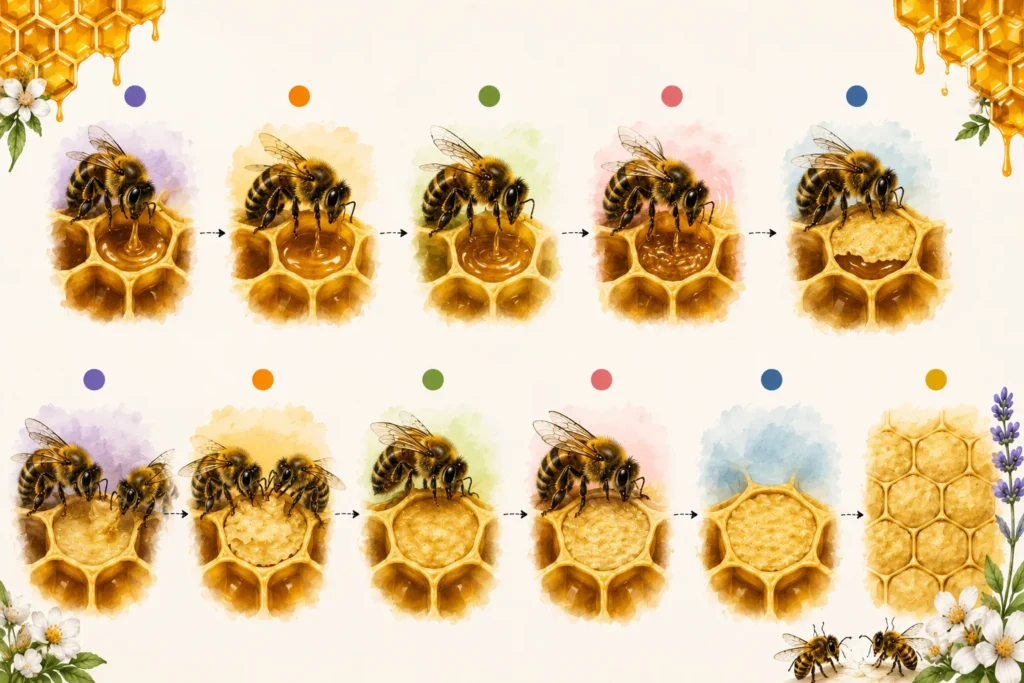
Honeycomb sealing is the final stage of the honey production process. After nectar has been transformed into mature honey, worker bees seal each honey-filled cell with a thin layer of beeswax. This natural sealing process protects the honey, preserves its quality, and ensures a reliable food source for the colony.
Honeycomb sealing is a remarkable example of how bees naturally store and safeguard their most valuable resource.
What Is Honeycomb Sealing?
Honeycomb sealing, also known as honey capping, is the process by which bees cover honey-filled honeycomb cells with beeswax once the honey has fully ripened.
This wax cap acts as a protective barrier that keeps the honey fresh and safe for long-term storage.
The Honeycomb Sealing Process
Honey Ripening
Before sealing begins, bees reduce the moisture content of the nectar through evaporation. This process transforms nectar into mature honey with the proper consistency.
Beeswax Production
Worker bees produce beeswax from special glands located on their abdomen. The wax is naturally secreted and shaped into thin flakes.
Cell Capping
Using the beeswax they produce, worker bees carefully cover each honey-filled cell with a protective wax cap.
Long-Term Storage
Once sealed, the honey can be stored safely within the hive for extended periods without losing its quality.
Benefits of Honeycomb Sealing
Preserves Freshness
The wax cap helps maintain the natural freshness and flavor of the honey.
Protects Quality
Sealed honey remains protected from environmental changes that could affect its quality.
Maintains Nutritional Value
The protective barrier helps preserve the natural enzymes, antioxidants, and nutrients found in honey.
Prevents Moisture Absorption
Honey naturally attracts moisture. The wax seal prevents excess moisture from entering the honey and causing fermentation.
Protection Against Contamination
Honeycomb sealing acts as a natural defense system for stored honey.
Blocks External Contaminants
The wax cap helps prevent dirt, dust, and microorganisms from entering the honeycomb cell.
Prevents Spoilage
By maintaining stable conditions inside the cell, the seal helps protect honey from spoilage and degradation.
Ensures Food Security
Stored honey serves as an essential food reserve for the colony during periods when flowers and nectar sources are limited.
Importance for Colony Survival
Honeycomb sealing is critical to the survival of honeybee colonies. During colder seasons or times of food scarcity, bees rely on their stored honey reserves for energy and nutrition.
Without proper sealing, honey could absorb moisture, ferment, or become contaminated, reducing its value as a food source.
Honeycomb Sealing and Pure Natural Honey
The quality of natural honey depends on the careful work of honeybees throughout the production process. Honeycomb sealing represents the final step in preserving the purity and goodness of honey before it is harvested.
This natural preservation method has been perfected by bees over millions of years.
Conclusion
Honeycomb sealing is a vital part of the honey production process. Through beeswax capping, honeybees protect their food supply, preserve honey quality, and ensure the survival of the colony.
At Homely Harvest, we value the natural processes that create pure, high-quality honey and celebrate the incredible work of honeybees that make it possible.
Call to Action
Choose Pure, Choose Homely Harvest.
Experience the purity of naturally preserved honey, crafted by bees and delivered with care.
The wax seal helps maintain the quality of the honey by protecting its:
Freshness
The sealed honey remains fresh for extended periods.
Quality
The beeswax cap helps preserve the honey’s natural characteristics.
Nutritional Value
Important nutrients and natural compounds remain protected inside the sealed cells.
Protection
Honeycomb sealing safeguards honey from external threats.
Moisture Prevention
The wax cap prevents excess moisture from entering the honey.
Contamination
The sealed cells protect the honey from dirt, microbes, and other contaminants.
Spoilage
Proper sealing helps prevent fermentation and spoilage.
Colony Food Source
Stored honey serves as a valuable food reserve for the colony, especially during seasons when flowers are scarce.
Why the Honey Production Process Matters
The honey production process demonstrates the incredible teamwork and efficiency of honeybee colonies. Every stage—from collecting nectar to sealing honeycomb cells—ensures that honey remains pure, nutritious, and naturally preserved.
This process also supports pollination, biodiversity, and sustainable agriculture, making bees essential to both ecosystems and food production.
Conclusion
The journey from flower nectar to pure honey involves a remarkable series of natural processes. Through bee collection, nectar processing, ripening, and honeycomb sealing, honeybees create one of nature’s most valued foods.
At Homely Harvest, we celebrate this extraordinary process and are committed to providing pure, naturally harvested honey that reflects the quality and care found within every hive.
Call to Action
Choose Pure, Choose Homely Harvest.
Experience the taste of authentic natural honey crafted through nature’s remarkable honey production process.