
Introduction
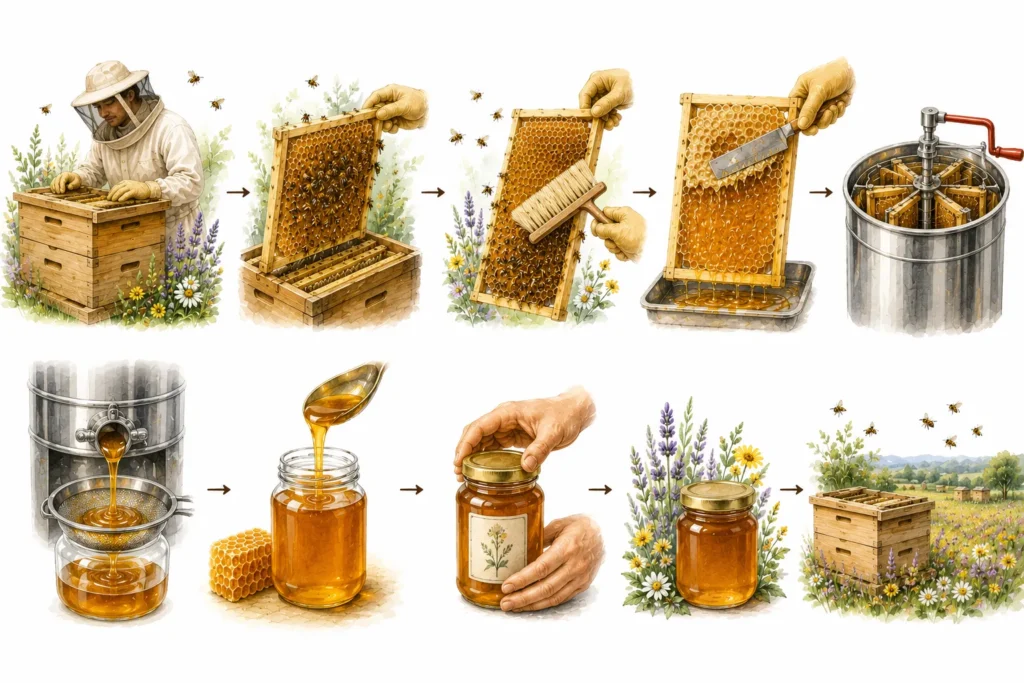
Ethical harvesting is a responsible approach to collecting honey that prioritizes the health and well-being of honeybee colonies. Sustainable beekeepers carefully harvest honey while ensuring that bees retain enough food for their survival. This practice helps maintain strong colonies, supports biodiversity, and ensures the long-term production of high-quality natural honey.
What Is Ethical Harvesting?
Ethical harvesting refers to the process of collecting honey in a way that minimizes stress on bee colonies and protects their natural behavior. Beekeepers follow sustainable methods that balance honey production with the needs of the bees.
The goal is to harvest excess honey without compromising colony health or survival.
Principles of Ethical Harvesting
Colony Well-Being
Responsible beekeepers prioritize the health of the colony throughout the harvesting process. Regular hive monitoring helps ensure that bees remain healthy and productive.
Adequate Food Reserves
Bees rely on honey as their primary food source. Ethical harvesting leaves sufficient honey in the hive to support the colony during periods of limited nectar availability.
Minimal Hive Disturbance
Harvesting is carried out carefully to reduce stress on the bees and maintain normal colony activities.
Sustainable Practices
Ethical beekeepers use environmentally responsible methods that support healthy bee populations and protect surrounding ecosystems.
Benefits of Ethical Harvesting
Healthy Bee Colonies
Protecting bee welfare helps maintain strong colonies capable of thriving and reproducing naturally.
High-Quality Honey
Healthy bees produce pure, natural honey with excellent flavor, aroma, and quality.
Biodiversity Support
Sustainable beekeeping encourages pollination, helping plants reproduce and supporting ecosystem diversity.
Long-Term Honey Production
By protecting colonies, ethical harvesting ensures a sustainable supply of honey for future generations.
Ethical Harvesting and Environmental Responsibility
Ethical harvesting goes beyond honey collection. It promotes:
- Pollinator conservation
- Sustainable agriculture
- Healthy ecosystems
- Responsible resource management
- Protection of native plant species
These practices help create a balanced relationship between beekeepers, bees, and nature.
Why Ethical Harvesting Matters
Consumers increasingly want products that are responsibly sourced and environmentally friendly. Ethical harvesting provides confidence that honey is produced with respect for both nature and the bees that make it possible.
Supporting ethical beekeeping helps preserve pollinator populations and contributes to a healthier environment.
Conclusion
Ethical harvesting is an essential part of sustainable honey production. By protecting bee colonies, leaving adequate food reserves, and minimizing hive disturbance, beekeepers can produce pure natural honey while supporting the long-term health of pollinators and ecosystems.
At Homely Harvest, we believe that great honey begins with responsible beekeeping and ethical harvesting practices that respect both bees and nature.
Call to Action
Choose Pure, Choose Homely Harvest.
Enjoy responsibly harvested natural honey produced with care, sustainability, and respect for nature.