
Introduction
A maturing tank is an important piece of equipment used in honey processing. After filtration, honey is stored in a maturing tank to allow air bubbles, fine wax particles, and remaining impurities to naturally separate from the honey. This process improves the honey’s clarity, consistency, and overall quality before packaging.
Maturing tanks help ensure that consumers receive pure, clean, and high-quality honey.
What Is a Maturing Tank?
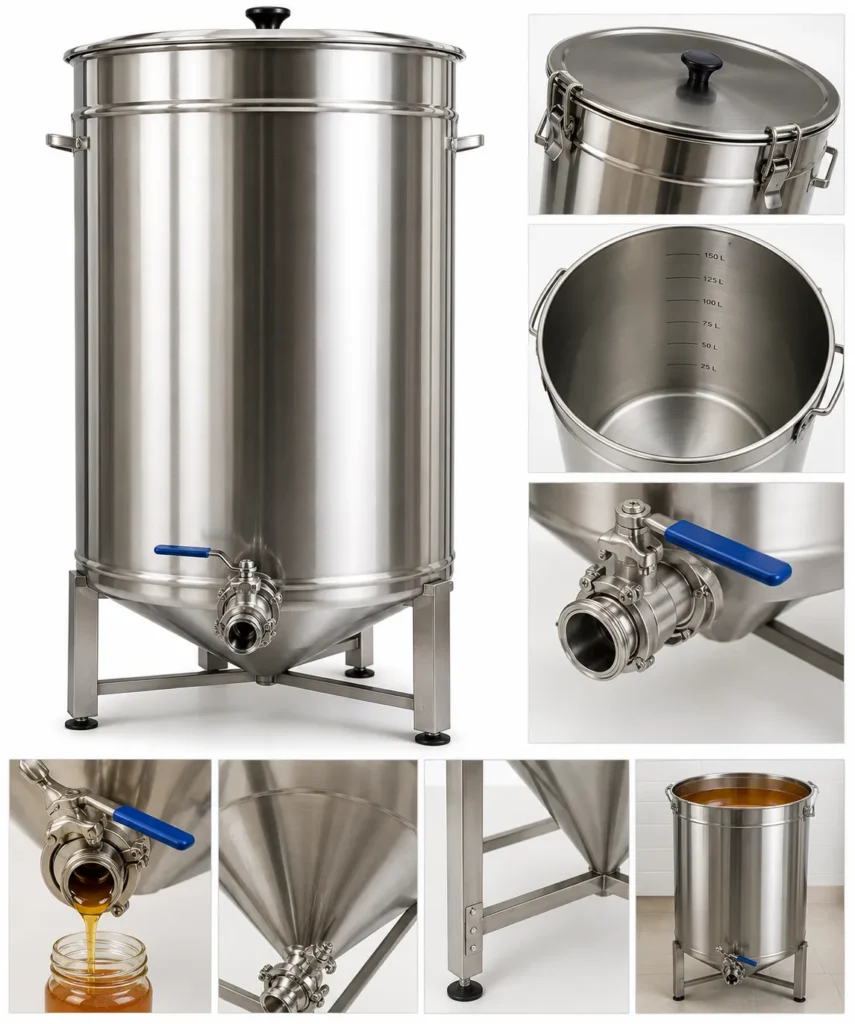
A maturing tank is a food-grade storage container used to hold honey for a specific period before packaging. During this resting phase, honey naturally settles, allowing unwanted particles to rise to the surface or sink to the bottom.
This process improves the appearance and quality of the final product without affecting its natural properties.
Why Is a Maturing Tank Important?
Improves Honey Clarity
The settling process helps remove air bubbles and suspended particles, resulting in cleaner and clearer honey.
Enhances Product Quality
Maturing allows honey to develop a more uniform texture and appearance.
Supports Natural Processing
The tank uses gravity and settling rather than excessive processing, helping preserve the honey’s natural characteristics.
Prepares Honey for Packaging
Honey becomes more stable and ready for filling into jars and containers.
How a Maturing Tank Works
Honey Transfer
Filtered honey is transferred into the maturing tank after extraction and filtration.
Settling Period
The honey remains undisturbed for several hours or days, depending on the processing requirements.
Separation of Impurities
Fine wax particles, foam, and air bubbles gradually separate from the honey.
Surface Skimming
Any foam or impurities that rise to the top can be removed before packaging.
Ready for Packaging
Once the honey has matured and settled, it is transferred for filling, sealing, and labeling.
Components of a Maturing Tank
Stainless Steel Body
Most maturing tanks are made from food-grade stainless steel to ensure hygiene and durability.
Honey Outlet Valve
A valve located near the bottom allows clean honey to be removed easily.
Airtight Lid
The lid protects the honey from contamination during the settling process.
Large Capacity Storage
Maturing tanks are available in different sizes to suit both small-scale and commercial honey production.
Benefits of Using a Maturing Tank
Cleaner Honey
Reduces visible particles and improves product presentation.
Better Consistency
Allows honey to achieve a more uniform texture before packaging.
Improved Packaging Quality
Settled honey fills containers more efficiently and attractively.
Preserves Natural Properties
The process enhances quality without excessive processing or heating.
Maturing Tanks and Natural Honey
A maturing tank supports gentle honey processing by allowing natural settling. Unlike aggressive filtration methods, maturation helps improve honey quality while maintaining its natural flavor, aroma, enzymes, and nutrients.
This makes it an important step in producing premium natural honey.
Importance in Honey Production
The maturing tank serves as the final quality-improvement stage before packaging. It helps create honey that is clear, clean, and visually appealing while preserving its natural goodness.
Without proper maturation, air bubbles and fine particles may remain in the finished product.
Conclusion
A maturing tank is an essential piece of honey processing equipment that helps improve clarity, consistency, and overall product quality. Through natural settling and careful handling, it ensures that honey is ready for packaging and consumption.
At Homely Harvest, we use responsible honey processing practices and quality equipment to deliver pure, natural honey that meets the highest standards of excellence.
Call to Action
Choose Pure, Choose Homely Harvest.
Enjoy naturally matured honey that delivers purity, freshness, and exceptional quality in every jar.