
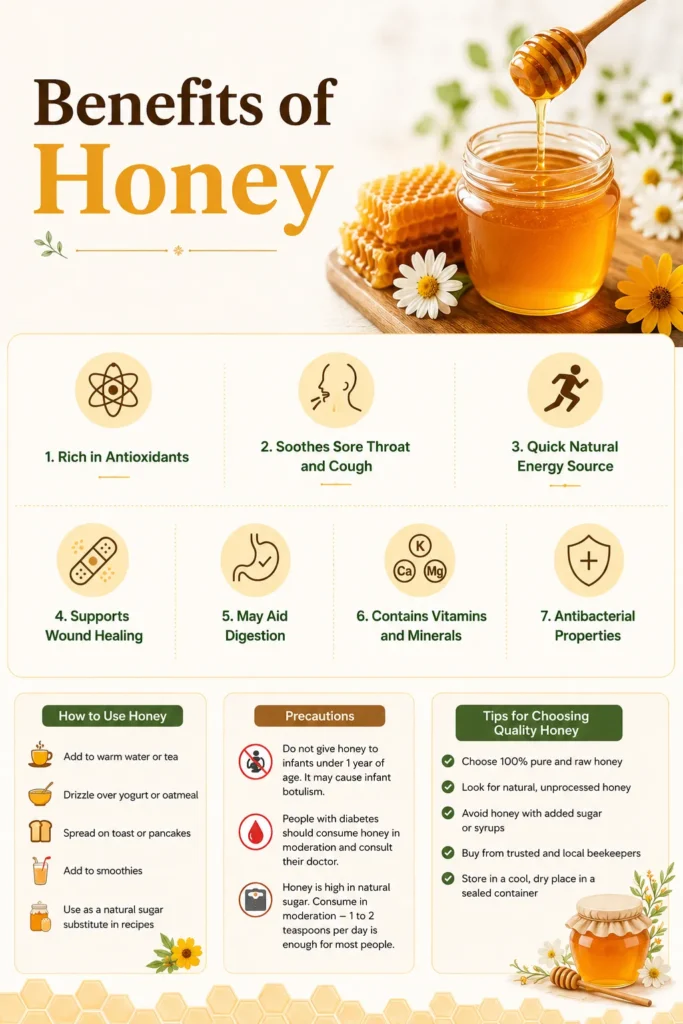
Honey has been valued for thousands of years as both a natural sweetener and a traditional remedy. Unlike refined sugar, pure honey contains antioxidants, beneficial plant compounds, and small amounts of essential nutrients that support overall health. Whether you enjoy it in warm water, tea, yogurt, or as a natural sugar substitute, honey offers several health benefits when consumed in moderation.
In this guide, we’ll explore the science-backed benefits of honey, how to use it, and the precautions you should know before making it part of your daily diet.
What Is Honey?
Honey is a natural sweet substance produced by honeybees from the nectar of flowers. Bees collect nectar, transform it using natural enzymes, and store it in honeycombs where it matures into honey. Depending on the flowers visited by the bees, honey varies in color, taste, aroma, and nutritional value.
Pure, raw honey retains more natural enzymes, antioxidants, and beneficial compounds than heavily processed honey.
Health Benefits of Honey
1. Rich in Antioxidants
One of the biggest health benefits of honey is its high antioxidant content. These antioxidants help protect your body’s cells from damage caused by free radicals.
Honey Contains:
- Flavonoids
- Phenolic compounds
- Natural plant antioxidants
Benefits
- Protects cells from oxidative stress
- Supports a healthy immune system
- May reduce the risk of chronic diseases
- Helps slow premature aging
Darker varieties of honey generally contain higher levels of antioxidants than lighter varieties.
2. Soothes Sore Throat and Cough
Honey is one of the most popular natural remedies for sore throats and coughs. Its smooth texture coats the throat, while its natural antibacterial properties help reduce irritation.
Benefits
- Reduces coughing
- Provides nighttime cough relief
- Soothes throat irritation
- Helps improve sleep during colds
A spoonful of honey before bedtime may help reduce nighttime coughing in adults and children over one year of age.
3. A Quick Natural Energy Source
Honey provides a fast source of energy because it contains two natural sugars:
- Glucose
- Fructose
Glucose is absorbed quickly, giving your body immediate energy, while fructose is absorbed more slowly, providing sustained energy.
Perfect For
- Athletes
- Morning workouts
- Pre-workout snacks
- Hiking and outdoor activities
- Busy professionals
Instead of processed energy drinks, many people choose honey as a healthier natural alternative.
4. Supports Wound Healing
Medical-grade honey has been used in healthcare for many years due to its antibacterial and anti-inflammatory properties.
Benefits
- Helps prevent bacterial growth
- Maintains a moist healing environment
- Supports faster wound recovery
- Helps reduce inflammation
Important: Only medical-grade honey should be used for wound treatment. Regular kitchen honey should not be applied to open wounds without medical advice.
5. May Aid Digestion
Honey has been traditionally used to support digestive health.
Potential Benefits
- Helps soothe the digestive tract
- May support healthy gut bacteria
- Can reduce mild stomach discomfort
- Supports overall digestive wellness
Many people enjoy warm water with honey in the morning as part of their daily wellness routine.
6. Contains Vitamins and Minerals
Although honey is not a major source of vitamins and minerals, it contains small amounts of beneficial nutrients.
Minerals Found in Honey
- Potassium
- Calcium
- Magnesium
These minerals contribute to overall health and support normal body functions.
Nutritional Value of Honey
Honey is primarily composed of natural carbohydrates that provide energy.
Main Components
- Natural sugars
- Antioxidants
- Enzymes
- Amino acids
- Trace vitamins
- Essential minerals
The exact nutritional profile depends on the flowers visited by the bees and the type of honey.
How to Use Honey Daily
Honey is versatile and easy to include in your diet.
Add Honey To
- Warm water
- Herbal tea
- Lemon water
- Yogurt
- Oatmeal
- Smoothies
- Toast
- Pancakes
- Homemade salad dressings
It also works well as a natural substitute for refined sugar in many recipes.
Precautions When Consuming Honey
Although honey offers many health benefits, it should be consumed responsibly.
Consume in Moderation
Honey is still high in natural sugar.
Recommended Intake
- 1–2 teaspoons per day for most adults
- Include it as part of a balanced diet
Excessive consumption can contribute to excess calorie intake and elevated blood sugar.
Not Suitable for Infants
Children under 1 year of age should never consume honey.
Reason
Honey may contain bacterial spores that can cause infant botulism, a rare but serious illness.
Always wait until a child is over one year old before introducing honey.
People with Diabetes
People with diabetes can consume honey only under proper dietary guidance.
Remember
- Honey can raise blood sugar levels.
- Monitor portion sizes carefully.
- Consult your healthcare provider before regular use.
Honey is natural, but it still affects blood glucose similarly to other sweeteners.
Tips for Choosing High-Quality Honey
To enjoy the maximum health benefits, choose high-quality honey.
Look for:
- 100% pure honey
- Raw or minimally processed honey
- No added sugar or syrups
- Trusted local or certified producers
- Properly sealed glass jars
Quality honey retains more of its natural nutrients and flavor.
Frequently Asked Questions
Is honey healthier than sugar?
Honey contains antioxidants and trace nutrients that refined sugar lacks. However, both are sources of sugar, so moderation is important.
Can I eat honey every day?
Yes. Most healthy adults can enjoy 1–2 teaspoons daily as part of a balanced diet.
Does honey help with a cough?
Yes. Honey may help reduce coughing and soothe sore throats, especially before bedtime.
Is raw honey better?
Raw honey generally retains more natural enzymes and antioxidants because it undergoes minimal processing.
Can honey improve digestion?
Honey may support digestive health and soothe mild digestive discomfort, although results vary from person to person.
Final Thoughts
Honey is much more than a natural sweetener. It is packed with antioxidants, offers quick natural energy, helps soothe sore throats, supports wound healing with medical-grade applications, and contains small amounts of beneficial vitamins and minerals. When enjoyed in moderation, honey can be a valuable addition to a healthy lifestyle.
Choose pure, high-quality honey, consume it responsibly, and remember that while honey provides many health benefits, it should complement a balanced diet rather than replace other nutritious foods.
Whether stirred into tea, drizzled over oatmeal, or enjoyed by the spoonful, honey remains one of nature’s most delicious and beneficial gifts.