
Introduction
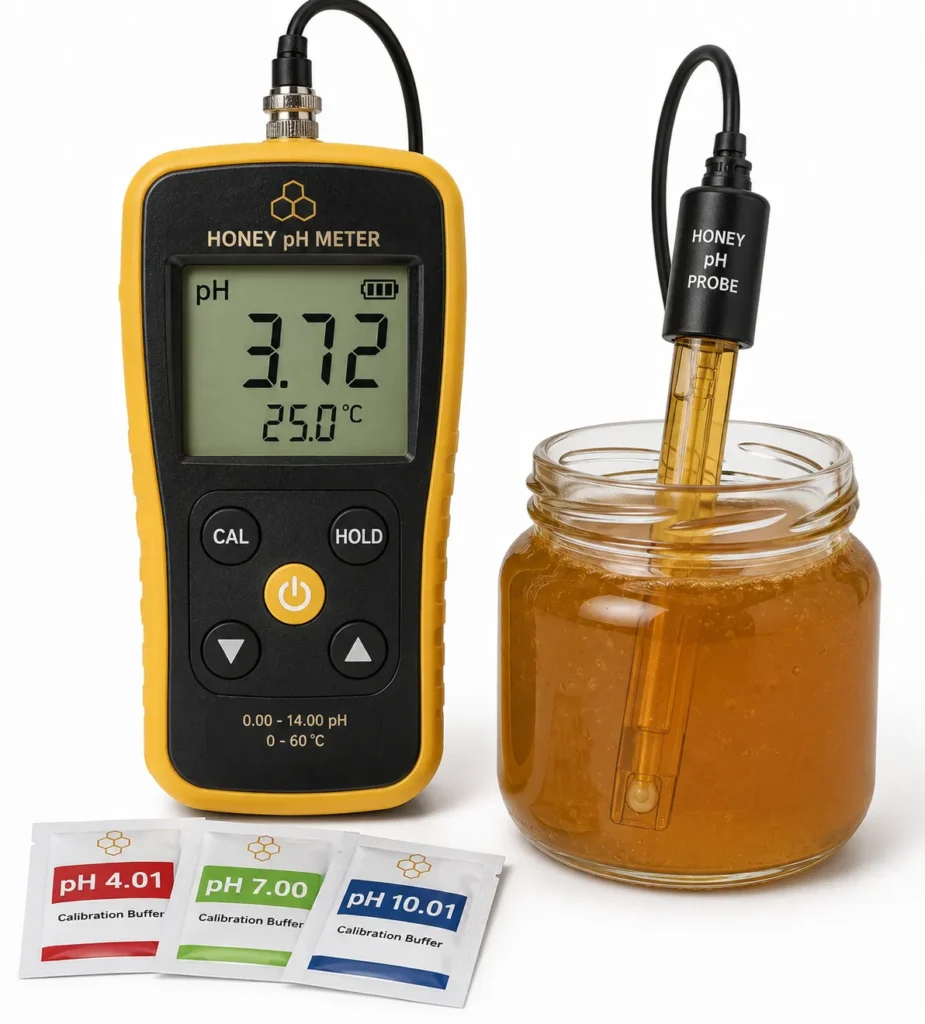
A pH meter is an important quality control instrument used in honey processing and testing. It measures the acidity level of honey, helping producers evaluate product quality, freshness, and stability. Since honey is naturally acidic, monitoring its pH is essential for maintaining consistency and ensuring high-quality honey production.
A pH meter provides accurate measurements that support quality assurance throughout the honey processing journey.
What Is a pH Meter?
A pH meter is a scientific instrument used to measure the acidity or alkalinity of a substance. In honey production, it helps determine the pH value of honey samples, providing valuable information about their quality and composition.
The device uses an electronic probe to deliver precise and reliable readings.
Why Is a pH Meter Important?
Measures Honey Acidity
Honey naturally contains organic acids that contribute to its flavor and preservation properties.
Supports Quality Control
Regular pH testing helps maintain product consistency across different batches.
Indicates Freshness
pH levels can provide insights into the condition and stability of honey.
Helps Meet Quality Standards
Many honey producers include pH testing as part of their quality assurance process.
How a pH Meter Works
Sample Preparation
A honey sample is prepared according to testing guidelines.
Probe Placement
The pH meter probe is placed into the sample solution.
Measurement Process
The device measures hydrogen ion activity and calculates the pH value.
Result Display
The pH reading appears on the digital display within seconds.
Features of a pH Meter
High Accuracy
Provides precise acidity measurements.
Digital Display
Shows easy-to-read pH values.
Fast Results
Delivers measurements quickly and efficiently.
Portable Design
Can be used in laboratories, honey processing units, and apiaries.
Benefits of Using a pH Meter
Better Quality Monitoring
Helps producers maintain consistent honey quality.
Improved Product Stability
Supports proper storage and processing decisions.
Enhanced Consumer Confidence
Quality-tested honey builds trust among customers.
Reliable Testing
Provides accurate data for quality assurance programs.
Typical pH Range of Honey
Most natural honey has a pH value between 3.2 and 4.5, making it naturally acidic.
This acidity contributes to honey’s unique taste, preservation qualities, and resistance to microbial growth.
Importance in Honey Production
The pH meter is a valuable quality testing tool that helps producers monitor honey characteristics and maintain product standards. Combined with moisture testing, filtration, and quality inspections, pH testing contributes to the production of premium honey.
Regular testing helps ensure that honey reaches consumers in its best possible condition.
Conclusion
A pH meter is an essential quality control instrument in modern honey processing. By accurately measuring acidity levels, it helps producers maintain consistency, monitor product quality, and ensure customer satisfaction.
At Homely Harvest, we use careful testing and quality control practices to ensure that every jar of honey meets our standards for purity, freshness, and excellence.