
Introduction
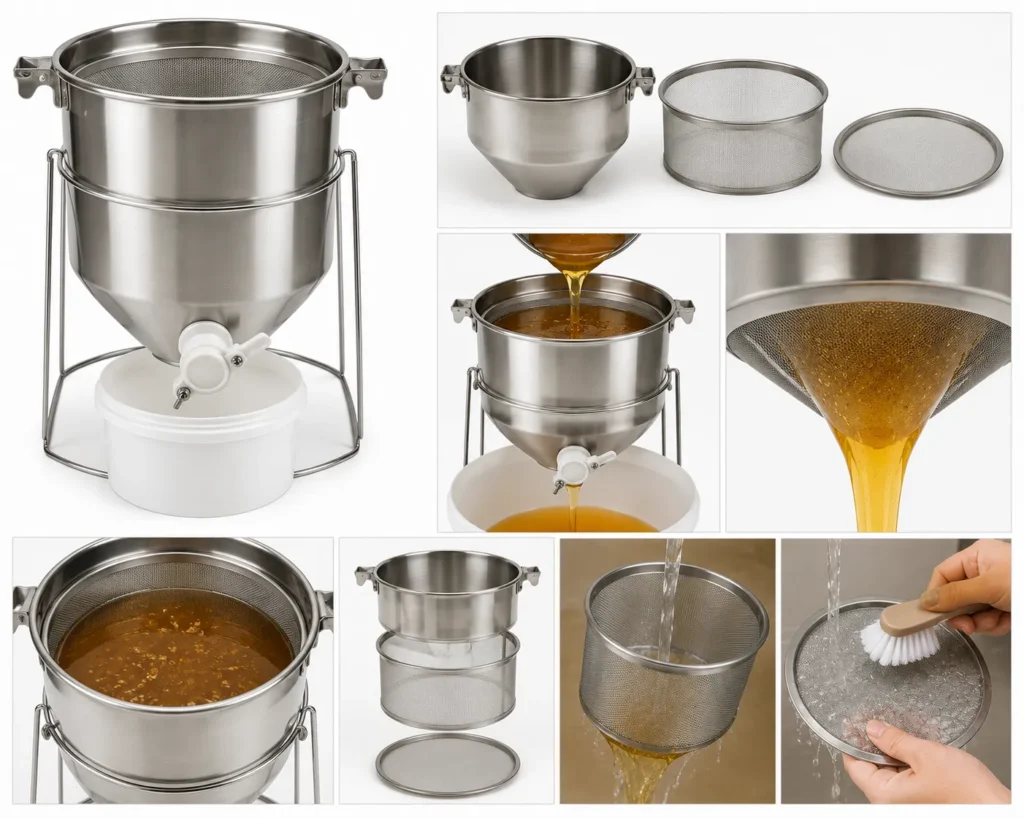
A honey filter is an important piece of equipment used during honey processing. After honey is extracted from the honeycomb, it passes through a filtering system to remove wax particles, bee debris, and other natural impurities. This process helps ensure that the honey remains clean, pure, and ready for packaging while preserving its natural flavor and nutritional value.
Honey filters play a key role in delivering high-quality honey from the hive to consumers.
What Is a Honey Filter?
A honey filter is a specialized filtration device designed to clean extracted honey by removing unwanted particles. It uses fine mesh screens or filtration systems that allow honey to flow through while trapping impurities.
The purpose of filtration is to improve the clarity and cleanliness of honey without compromising its natural properties.
Why Is a Honey Filter Important?
Removes Impurities
During extraction, small pieces of beeswax, pollen, propolis, and other debris may enter the honey. The filter removes these unwanted materials.
Improves Honey Appearance
Filtered honey has a cleaner and more appealing appearance, making it attractive to consumers.
Maintains Product Quality
Proper filtration helps preserve the natural taste, aroma, and consistency of honey.
Supports Food Safety
Removing contaminants contributes to hygienic processing and high-quality honey production.
How a Honey Filter Works
Honey Collection
Freshly extracted honey is collected from the honey extractor.
Filtration Stage
The honey passes through fine mesh screens or filter layers designed to capture impurities.
Debris Removal
Wax particles, bee fragments, and other unwanted materials are separated from the honey.
Clean Honey Storage
The filtered honey is transferred to storage tanks or containers for quality checks and packaging.
Types of Honey Filters
Mesh Honey Filter
Uses fine mesh screens to remove larger particles while allowing honey to flow smoothly.
Double Filter System
Features multiple filtration layers for improved cleaning and higher-quality results.
Stainless Steel Filter
Durable, easy to clean, and widely used in professional honey processing operations.
Commercial Honey Filter
Designed for large-scale honey production and capable of handling higher volumes efficiently.
Benefits of Using a Honey Filter
Cleaner Honey
Removes visible impurities and improves overall product appearance.
Better Consumer Experience
Provides smooth, clear honey that meets consumer expectations.
Preserves Natural Goodness
Maintains the natural flavor, nutrients, and beneficial properties of honey.
Improves Processing Efficiency
Streamlines the honey preparation process before packaging.
Honey Filters and Natural Honey
Quality honey filtration focuses on removing unwanted particles while preserving the natural characteristics of honey. Responsible honey producers avoid excessive processing that could affect the honey’s flavor, aroma, and nutritional value.
The goal is to deliver honey that remains both pure and naturally authentic.
Importance in Honey Production
The honey filter serves as a critical link between extraction and packaging. It helps ensure that every batch of honey meets quality standards and reaches consumers in its best possible condition.
Without proper filtration, impurities could affect the appearance, texture, and overall quality of the final product.
Conclusion
A honey filter is an essential tool in modern honey processing. By removing wax particles and other natural debris, it helps produce clean, pure, and high-quality honey while preserving its natural goodness.
At Homely Harvest, we use careful filtration methods and quality equipment to ensure that every jar of honey reflects purity, freshness, and excellence.
Call to Action
Choose Pure, Choose Homely Harvest.
Enjoy carefully filtered natural honey that delivers purity, quality, and nature’s sweetness in every spoonful.