
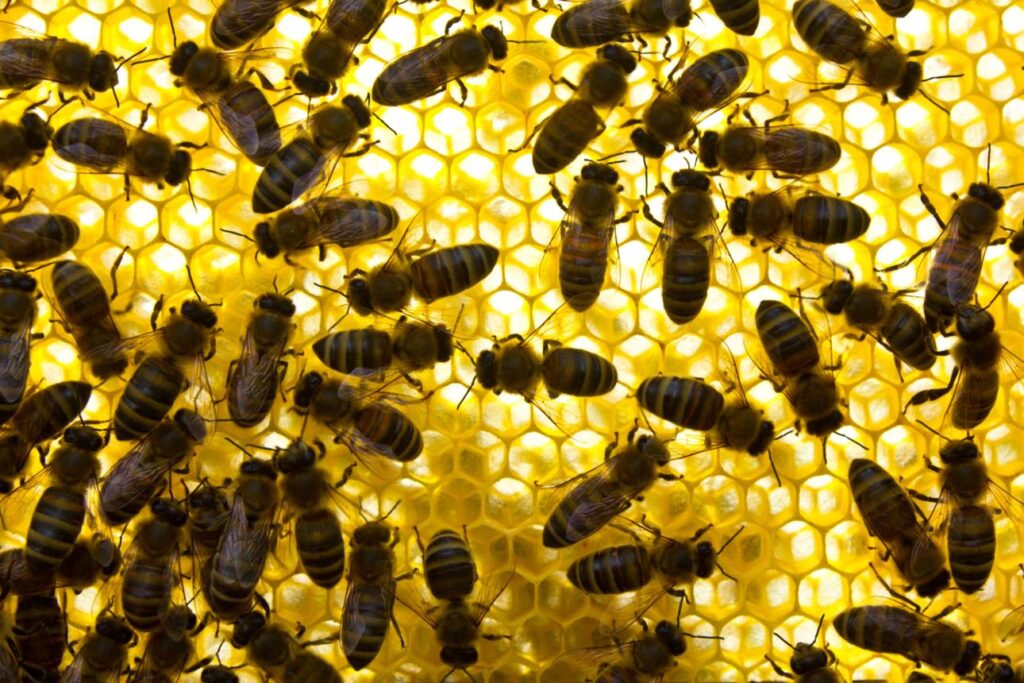
Honey is one of nature’s most remarkable creations. The natural process of honey production involves thousands of worker bees working together to collect nectar, process it inside the hive, and transform it into pure honey. This process has evolved over millions of years and demonstrates the incredible efficiency of honeybee colonies.
Understanding how honey is naturally produced helps us appreciate the journey from flower to honey jar and the value of pure, natural honey.
Nectar Collection
The honey-making process begins with nectar collection.
Worker Bees
Worker bees leave the hive in search of flowering plants rich in nectar. These bees are responsible for gathering the resources needed to feed the colony and produce honey.
Flower Source
Flowers serve as the primary source of nectar. As bees visit blossoms, they collect the sweet liquid using their specialized mouthparts and store it in their honey stomach for transport back to the hive.
Hive Processing
Once the nectar reaches the hive, bees begin transforming it into honey.
Nectar Transfer
Forager bees pass the collected nectar to house bees inside the hive. This transfer allows the nectar to move through several bees before storage.
Enzyme Mixing
During the transfer process, bees mix the nectar with natural enzymes. These enzymes play an essential role in changing the nectar’s chemical composition.
Complex Sugar Breakdown
The enzymes help break down complex sugars into simpler sugars. This process improves preservation and prepares the nectar for long-term storage as honey.
Ripening
After processing, the nectar enters the ripening stage.
Honeycomb Cells
Bees place the processed nectar into honeycomb cells. These cells act as natural storage containers within the hive.
Moisture Evaporation
Fresh nectar contains a high amount of water. Worker bees fan their wings to create airflow, helping excess moisture evaporate from the stored nectar.
Ripening Consistency
As water content decreases, the nectar thickens and develops the rich texture and consistency associated with mature honey.
Preservation
The final stage ensures that honey remains protected and available for future use.
Wax Sealing
Once the honey reaches the proper consistency, bees seal each honeycomb cell with a thin layer of wax. This protective cap prevents contamination and preserves the honey’s quality.
Future Use
Stored honey serves as an important food reserve for the colony, especially during seasons when flowers are unavailable. This preservation method allows bees to survive throughout the year.
Why the Natural Process Matters
The natural process of honey production creates a nutrient-rich food that has been valued for centuries. Every step, from nectar collection to wax sealing, contributes to the quality, flavor, and purity of the final product.
This process also supports pollination, biodiversity, and healthy ecosystems, making honeybees essential to both agriculture and nature.
Conclusion
The natural process of honey production is a remarkable example of teamwork and efficiency in nature. Through nectar collection, hive processing, ripening, and preservation, honeybees transform flower nectar into pure natural honey.
At Homely Harvest, we respect and celebrate this natural process, ensuring that every jar of honey reflects the purity, quality, and goodness created by hardworking honeybees.
Call to Action
Choose Pure, Choose Homely Harvest.
Experience the taste of authentic natural honey produced through nature’s timeless process.