
Introduction
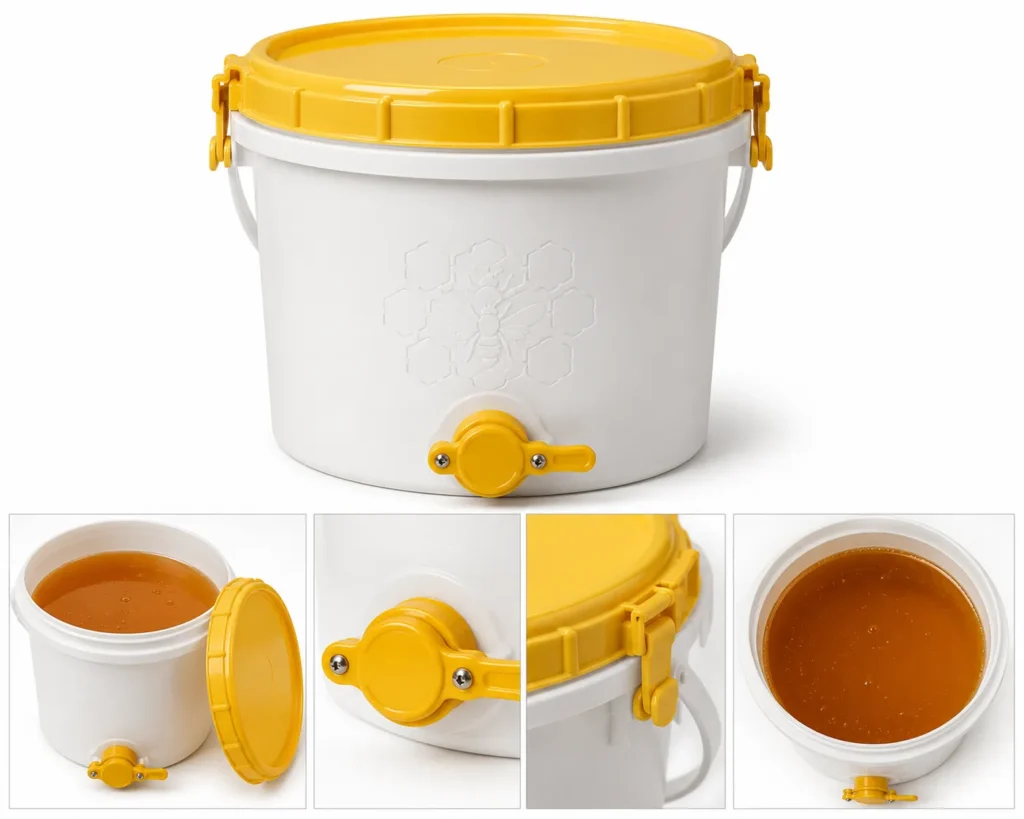
Honey storage containers play an important role in maintaining the quality, purity, and freshness of honey throughout the production process. After extraction, filtration, and maturation, honey is stored in specialized containers before packaging. These containers help protect honey from contamination, moisture, and environmental factors that could affect its quality.
Proper storage ensures that honey retains its natural flavor, aroma, and nutritional value until it reaches consumers.
What Is a Honey Storage Container?
A honey storage container is a food-grade vessel designed to safely hold honey during processing, maturation, and distribution. These containers are made from materials that preserve honey quality while preventing contamination.
They serve as a secure holding system between honey processing and final packaging.
Why Are Honey Storage Containers Important?
Maintains Honey Purity
Storage containers protect honey from dust, dirt, and external contaminants.
Preserves Freshness
Proper storage helps maintain the natural taste and aroma of honey.
Prevents Moisture Absorption
Honey naturally absorbs moisture from the environment. Secure containers help prevent this process.
Supports Quality Control
Storage containers provide a controlled environment for maintaining product consistency.
Types of Honey Storage Containers
Stainless Steel Containers
Widely used in commercial honey production due to their durability, hygiene, and resistance to corrosion.
Food-Grade Plastic Containers
Lightweight and cost-effective containers suitable for honey storage and transportation.
Honey Storage Drums
Large-capacity containers used for bulk honey storage before packaging.
Maturing Tanks
Specialized storage containers that allow honey to settle and improve in clarity before bottling.
Features of a Good Honey Storage Container
Food-Grade Material
The container should be made from materials approved for food storage.
Airtight Lid
A secure lid prevents contamination and moisture entry.
Easy Cleaning
Smooth surfaces support proper hygiene and maintenance.
Durable Construction
Strong materials ensure long-term performance and product protection.
Benefits of Proper Honey Storage
Preserves Product Quality
Protects the honey’s natural characteristics during storage.
Extends Shelf Life
Proper storage conditions help maintain freshness over extended periods.
Improves Processing Efficiency
Organized storage supports smooth packaging and distribution operations.
Enhances Food Safety
Clean containers reduce the risk of contamination and spoilage.
Honey Storage Best Practices
Keep Containers Sealed
Always ensure lids remain tightly closed when not in use.
Store in a Clean Environment
Honey should be stored in hygienic conditions away from contaminants.
Avoid Excessive Heat
Moderate temperatures help preserve honey quality and natural properties.
Use Food-Grade Equipment
Only approved storage containers should be used during honey processing.
Importance in Honey Production
Honey storage containers serve as a crucial link between processing and packaging. They help maintain quality standards and ensure that honey remains in excellent condition before reaching consumers.
Without proper storage, honey may absorb moisture, lose quality, or become contaminated.
Conclusion
Honey storage containers are essential for preserving the purity, freshness, and quality of natural honey. By providing a safe and hygienic storage environment, they help ensure that every batch of honey maintains its natural goodness from production to packaging.
At Homely Harvest, we use quality storage solutions and responsible handling practices to protect the integrity of every drop of honey we produce.
Call to Action
Choose Pure, Choose Homely Harvest.
Enjoy carefully stored and expertly packaged natural honey that delivers freshness, purity, and nature’s sweetness in every jar.