
Introduction
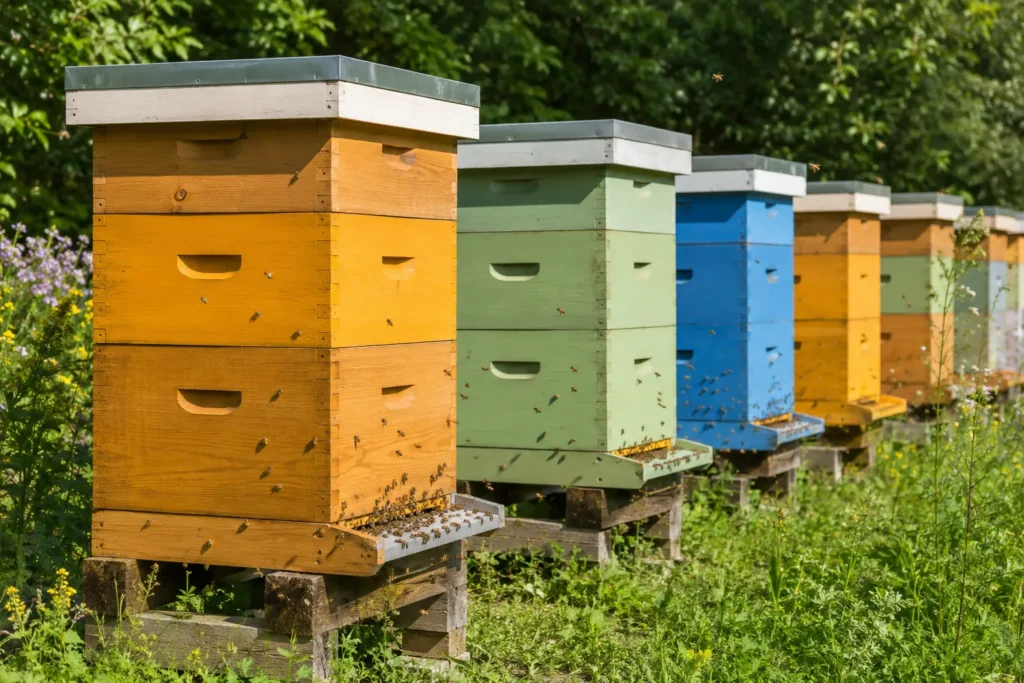
A beehive is the home of a honeybee colony and the center of all honey production activities. It provides a safe and organized environment where bees live, raise their young, store food, and produce honey. Every stage of the honey-making process takes place inside the hive, making it one of the most important components of beekeeping.
A healthy beehive supports strong bee colonies and contributes to the production of pure, natural honey.
What Is a Beehive?
A beehive is a structured dwelling where honeybees live and work together as a colony. In nature, bees build nests in tree hollows and other protected spaces. In modern beekeeping, bees are housed in specially designed hives that allow beekeepers to manage colonies while supporting bee health and honey production.
The hive serves as the colony’s home, food storage area, and breeding center.
Structure of a Beehive
Hive Boxes
The hive consists of stacked boxes that provide space for bees to build honeycombs and store honey.
Frames
Frames are removable structures inside the hive where bees build wax combs. These frames allow beekeepers to inspect the hive and harvest honey efficiently.
Honeycomb
Honeycomb is made from beeswax and consists of thousands of hexagonal cells used for storing honey, pollen, and developing bees.
Hive Entrance
The entrance allows worker bees to leave the hive in search of nectar and pollen and return with collected resources.
The Bee Colony Inside the Hive
Queen Bee
The queen bee is responsible for laying eggs and maintaining the colony population.
Worker Bees
Worker bees perform most hive activities, including nectar collection, honey production, hive maintenance, and caring for young bees.
Drone Bees
Drones are male bees whose primary role is to mate with a queen bee.
Functions of a Beehive
Honey Production
The hive is where nectar is processed, ripened, and stored as honey.
Brood Rearing
Young bees develop inside special cells within the honeycomb.
Food Storage
The hive stores honey and pollen, which serve as food reserves for the colony.
Colony Protection
The hive provides shelter from weather conditions and helps protect bees from predators and external threats.
Importance of a Healthy Beehive
Supports Colony Growth
A well-maintained hive allows the colony to grow and thrive.
Enhances Honey Production
Healthy colonies in suitable hives produce more high-quality honey.
Promotes Pollination
Strong bee populations contribute to pollination and agricultural productivity.
Protects Bee Welfare
Proper hive management helps maintain the health and well-being of the colony.
Beehives and Sustainable Beekeeping
Responsible beekeepers regularly inspect and maintain hives to ensure healthy living conditions for bees. Sustainable hive management supports long-term honey production while protecting pollinators and the environment.
Healthy hives are essential for ethical beekeeping and high-quality honey production.
Conclusion
The beehive is the foundation of every honeybee colony and the starting point of the honey production journey. It provides shelter, supports colony activities, and serves as the place where nature transforms flower nectar into pure natural honey.
At Homely Harvest, we value healthy beehives and responsible beekeeping practices that help produce the pure, high-quality honey our customers enjoy.
Call to Action
Choose Pure, Choose Homely Harvest.
Experience the goodness of honey crafted by thriving bee colonies in healthy, sustainable beehives.