
Introduction
Honey packaging is the final step in the honey production journey. After extraction, filtration, and quality checks, honey is carefully packed to preserve its purity, freshness, and nutritional value. Proper packaging protects honey from contamination, moisture, and environmental factors while ensuring that consumers receive a safe and high-quality product.
Effective packaging helps maintain the natural goodness of honey from the hive to the customer’s home.
What Is Honey Packaging?
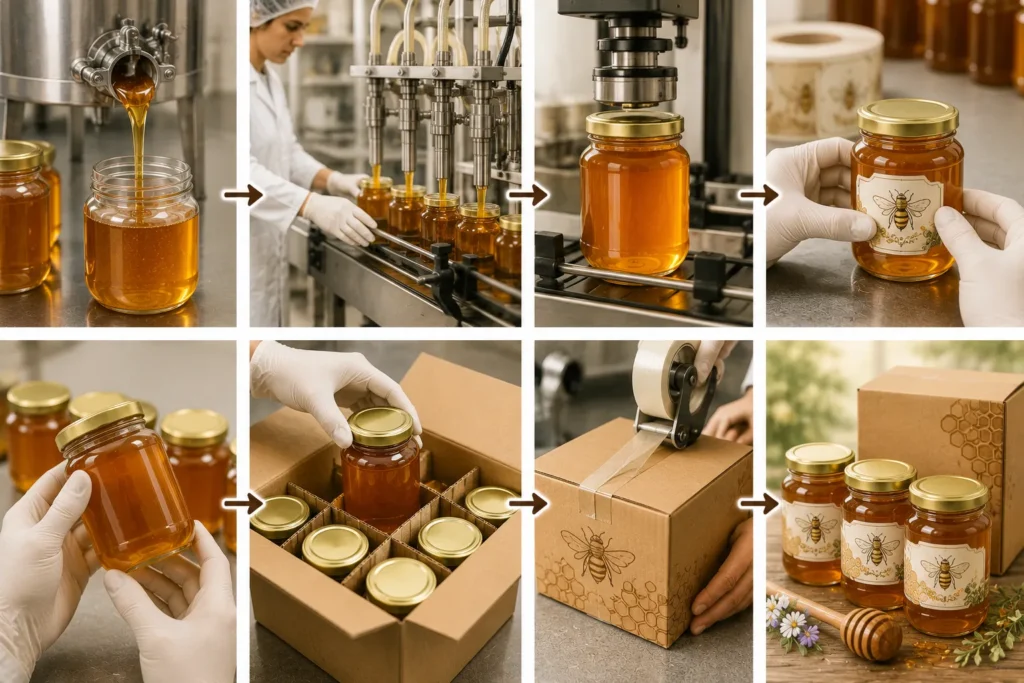
Honey packaging is the process of filling, sealing, labeling, and preparing honey for storage, transportation, and sale. This stage ensures that honey remains protected and retains its quality throughout its shelf life.
The goal is to deliver pure natural honey in a hygienic and convenient form.
The Honey Packaging Process
Container Preparation
Packaging begins with the selection and cleaning of food-grade containers. These containers must be hygienic and suitable for storing honey.
Filling
Filtered and quality-tested honey is carefully filled into containers using controlled processes that maintain consistency and prevent contamination.
Sealing
Each container is securely sealed to protect the honey from air, moisture, and external contaminants.
Labeling
Labels are applied to provide important product information, including:
- Product name
- Net weight
- Ingredients
- Batch information
- Storage instructions
- Brand details
Final Inspection
Before distribution, packaged honey undergoes a final inspection to verify product quality, packaging integrity, and labeling accuracy.
Importance of Proper Packaging
Preserves Freshness
Secure packaging helps maintain the natural flavor and aroma of honey.
Protects Quality
Packaging prevents contamination and preserves the honey’s nutritional properties.
Extends Shelf Life
Properly sealed containers help maintain product stability during storage.
Ensures Consumer Safety
Hygienic packaging practices support food safety and product reliability.
Types of Honey Packaging
Glass Jars
Glass containers provide excellent protection and help preserve honey’s natural quality.
Food-Grade Plastic Bottles
Lightweight and durable containers offer convenience and easy handling.
Squeeze Bottles
Designed for controlled pouring and convenient daily use.
Bulk Packaging
Large containers are commonly used for commercial and wholesale distribution.
Sustainable Packaging Practices
Responsible honey producers increasingly adopt sustainable packaging solutions, including:
- Recyclable materials
- Reusable containers
- Eco-friendly packaging designs
- Reduced packaging waste
These practices help minimize environmental impact while maintaining product quality.
Why Honey Packaging Matters
Packaging is more than just a container. It protects the product, communicates important information, and enhances the customer experience. High-quality packaging reflects a producer’s commitment to purity, safety, and excellence.
Conclusion
Honey packaging is the final step that ensures pure natural honey reaches consumers in the best possible condition. Through careful filling, sealing, labeling, and inspection, producers protect the freshness, quality, and authenticity of every jar.
At Homely Harvest, we use hygienic and reliable packaging practices to deliver honey that retains its natural goodness from hive to home.
Call to Action
Choose Pure, Choose Homely Harvest.
Enjoy carefully packed natural honey that delivers purity, freshness, and quality in every jar.
Honey Packaging: Preserving Freshness from Hive to Home
Introduction
Honey packaging is the final step in the honey production journey. After extraction, filtration, and quality checks, honey is carefully packed to preserve its purity, freshness, and nutritional value. Proper packaging protects honey from contamination, moisture, and environmental factors while ensuring that consumers receive a safe and high-quality product.
Effective packaging helps maintain the natural goodness of honey from the hive to the customer’s home.
What Is Honey Packaging?
Honey packaging is the process of filling, sealing, labeling, and preparing honey for storage, transportation, and sale. This stage ensures that honey remains protected and retains its quality throughout its shelf life.
The goal is to deliver pure natural honey in a hygienic and convenient form.
The Honey Packaging Process
Container Preparation
Packaging begins with the selection and cleaning of food-grade containers. These containers must be hygienic and suitable for storing honey.
Filling
Filtered and quality-tested honey is carefully filled into containers using controlled processes that maintain consistency and prevent contamination.
Sealing
Each container is securely sealed to protect the honey from air, moisture, and external contaminants.
Labeling
Labels are applied to provide important product information, including:
- Product name
- Net weight
- Ingredients
- Batch information
- Storage instructions
- Brand details
Final Inspection
Before distribution, packaged honey undergoes a final inspection to verify product quality, packaging integrity, and labeling accuracy.
Importance of Proper Packaging
Preserves Freshness
Secure packaging helps maintain the natural flavor and aroma of honey.
Protects Quality
Packaging prevents contamination and preserves the honey’s nutritional properties.
Extends Shelf Life
Properly sealed containers help maintain product stability during storage.
Ensures Consumer Safety
Hygienic packaging practices support food safety and product reliability.
Types of Honey Packaging
Glass Jars
Glass containers provide excellent protection and help preserve honey’s natural quality.
Food-Grade Plastic Bottles
Lightweight and durable containers offer convenience and easy handling.
Squeeze Bottles
Designed for controlled pouring and convenient daily use.
Bulk Packaging
Large containers are commonly used for commercial and wholesale distribution.
Sustainable Packaging Practices
Responsible honey producers increasingly adopt sustainable packaging solutions, including:
- Recyclable materials
- Reusable containers
- Eco-friendly packaging designs
- Reduced packaging waste
These practices help minimize environmental impact while maintaining product quality.
Why Honey Packaging Matters
Packaging is more than just a container. It protects the product, communicates important information, and enhances the customer experience. High-quality packaging reflects a producer’s commitment to purity, safety, and excellence.
Conclusion
Honey packaging is the final step that ensures pure natural honey reaches consumers in the best possible condition. Through careful filling, sealing, labeling, and inspection, producers protect the freshness, quality, and authenticity of every jar.
At Homely Harvest, we use hygienic and reliable packaging practices to deliver honey that retains its natural goodness from hive to home.
Call to Action
Choose Pure, Choose Homely Harvest.
Enjoy carefully packed natural honey that delivers purity, freshness, and quality in every jar.