
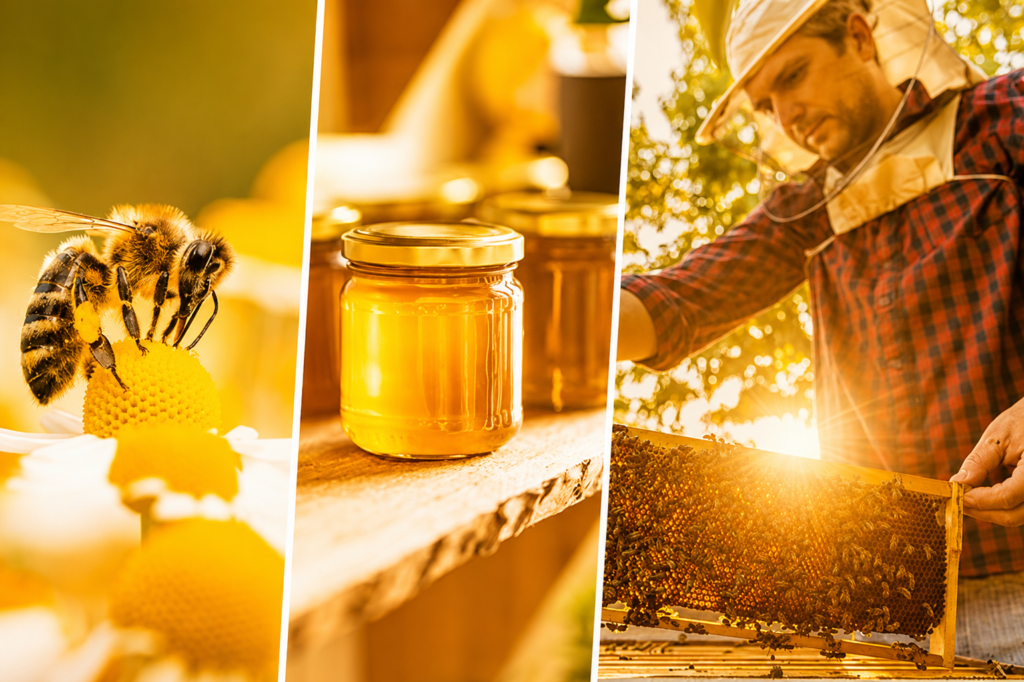
Beekeeping is the practice of managing honeybee colonies to produce honey, beeswax, and other natural products. It plays an important role in agriculture, environmental sustainability, and food production. Beekeepers carefully care for bee colonies, ensuring healthy hives and responsible honey harvesting while supporting pollination and biodiversity.
What Is Beekeeping?
Beekeeping, also known as apiculture, involves maintaining bee colonies in specially designed hives. Beekeepers monitor the health of the bees, protect them from pests and diseases, and provide suitable environments for them to thrive.
The primary goal of beekeeping is to produce high-quality honey while ensuring the well-being of the bee colony.
Why Beekeeping Is Important
1. Produces Natural Honey
Honeybees collect nectar from flowers and transform it into honey. Responsible beekeeping helps ensure the production of pure, natural honey without compromising bee health.
2. Supports Pollination
Bees are among the world’s most important pollinators. They help pollinate fruits, vegetables, nuts, and flowering plants, contributing to food security and healthy ecosystems.
3. Protects Biodiversity
Healthy bee populations support plant diversity and ecological balance. Sustainable beekeeping practices help preserve natural habitats and protect pollinator populations.
4. Supports Rural Livelihoods
Beekeeping provides income opportunities for farmers and rural communities while promoting environmentally friendly agricultural practices.
The Beekeeping Process
Choosing a Suitable Location
Beekeepers place hives in areas with abundant flowering plants, clean water sources, and minimal environmental disturbances.
Hive Management
Regular hive inspections help ensure that bees remain healthy and productive. Beekeepers monitor colony growth, food availability, and overall hive conditions.
Honey Collection
When bees fill honeycombs with mature honey, beekeepers carefully harvest the excess honey while leaving enough food for the colony.
Honey Extraction
Honey is extracted from the combs, filtered, and packed while preserving its natural quality and flavor.
Sustainable Beekeeping Practices
- Protecting natural forage areas
- Avoiding harmful chemicals
- Supporting bee health and welfare
- Practicing ethical honey harvesting
- Preserving local biodiversity
These practices help maintain strong bee colonies and ensure long-term honey production.
Beekeeping and Homely Harvest
At Homely Harvest, we value responsible sourcing and sustainable beekeeping practices. By working with trusted beekeepers, we ensure that every jar of honey reflects purity, quality, and respect for nature.
Conclusion
Beekeeping is much more than honey production. It supports agriculture, protects ecosystems, and contributes to a sustainable future. Through ethical beekeeping practices, we can enjoy pure natural honey while helping bees continue their essential role in nature.
Call to Action
Choose Pure, Choose Homely Harvest.
Experience the goodness of responsibly sourced natural honey harvested with care and respect for nature.