
Introduction
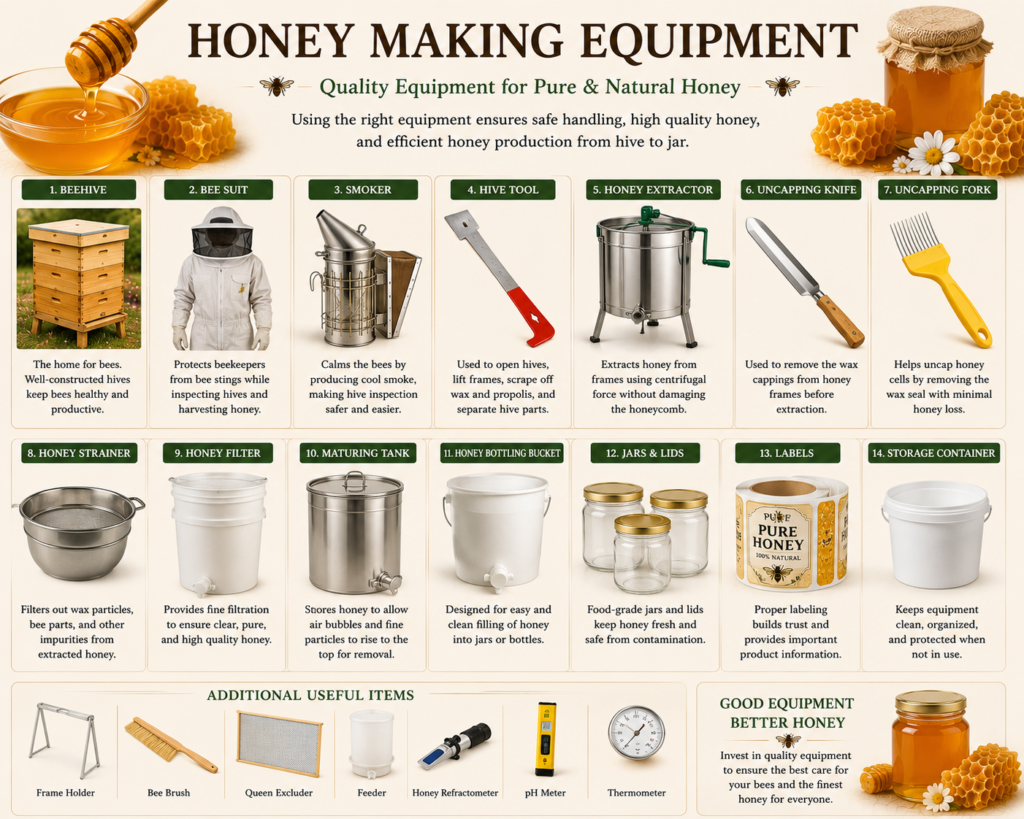
Honey production relies on more than hardworking bees. Beekeepers use specialized equipment to manage hives, harvest honey, and maintain product quality throughout the production process. The right equipment helps ensure efficient beekeeping, ethical harvesting, hygienic processing, and the production of pure natural honey.
From hive management to packaging, each tool plays an important role in bringing honey from the hive to the consumer.
Why Honey Making Equipment Is Important
Proper equipment helps beekeepers:
- Maintain healthy bee colonies
- Harvest honey safely and efficiently
- Protect honey quality
- Improve production efficiency
- Support hygienic processing practices
Modern beekeeping equipment allows producers to work responsibly while minimizing stress on the bees.
Essential Honey Making Equipment
Beehives
Beehives provide a safe and organized environment for honeybee colonies. They contain removable frames that allow bees to build honeycombs and store honey.
Protective Gear
Beekeepers wear protective clothing to safely work around bee colonies.
Bee Suit
A full-body suit protects the beekeeper from bee stings.
Gloves
Special gloves provide hand protection while handling hive components.
Veil
A protective veil shields the face and neck while maintaining visibility.
Honey Harvesting Equipment
Smoker
A smoker produces cool smoke that helps calm bees during hive inspections and honey harvesting.
Hive Tool
This versatile tool is used to separate hive components, remove frames, and scrape excess wax or propolis.
Bee Brush
A soft bee brush gently removes bees from frames before honey extraction.
Honey Extraction Equipment
Honey Extractor
The honey extractor uses centrifugal force to remove honey from honeycomb frames without damaging the comb structure.
Uncapping Knife
This tool removes the beeswax caps that seal honey-filled honeycomb cells.
Uncapping Tray
The tray collects wax cappings and honey during the uncapping process.
Honey Processing Equipment
Honey Filters
Filters remove wax particles and natural debris from extracted honey while preserving its purity.
Settling Tank
A settling tank allows air bubbles and fine particles to separate from the honey before packaging.
Storage Containers
Food-grade containers safely store honey before packaging and distribution.
Quality Control Equipment
Moisture Meter
This device measures honey moisture levels to ensure proper ripening and storage stability.
Quality Testing Tools
Various testing instruments help verify purity, consistency, and overall product quality.
Packaging Equipment
Filling Machine
Filling equipment accurately transfers honey into jars or bottles.
Sealing Machine
Sealing equipment secures containers and protects honey from contamination.
Labeling Equipment
Labels provide important product information and enhance brand presentation.
Benefits of Using Proper Equipment
Improved Honey Quality
Specialized equipment helps maintain the natural flavor, aroma, and nutritional value of honey.
Better Hive Management
Proper tools allow beekeepers to monitor and care for colonies effectively.
Increased Efficiency
Modern equipment streamlines production and reduces manual effort.
Enhanced Food Safety
Hygienic processing and packaging equipment help maintain product safety and quality.
Conclusion
Honey making equipment plays a vital role in every stage of honey production. From hive management and harvesting to extraction, filtration, quality control, and packaging, each tool contributes to producing pure, high-quality honey.
At Homely Harvest, we use responsible beekeeping practices and quality equipment to ensure that every jar of honey reflects the highest standards of purity, freshness, and care.
Call to Action
Choose Pure, Choose Homely Harvest.
Experience premium natural honey produced with care, expertise, and the finest honey-making practices.